
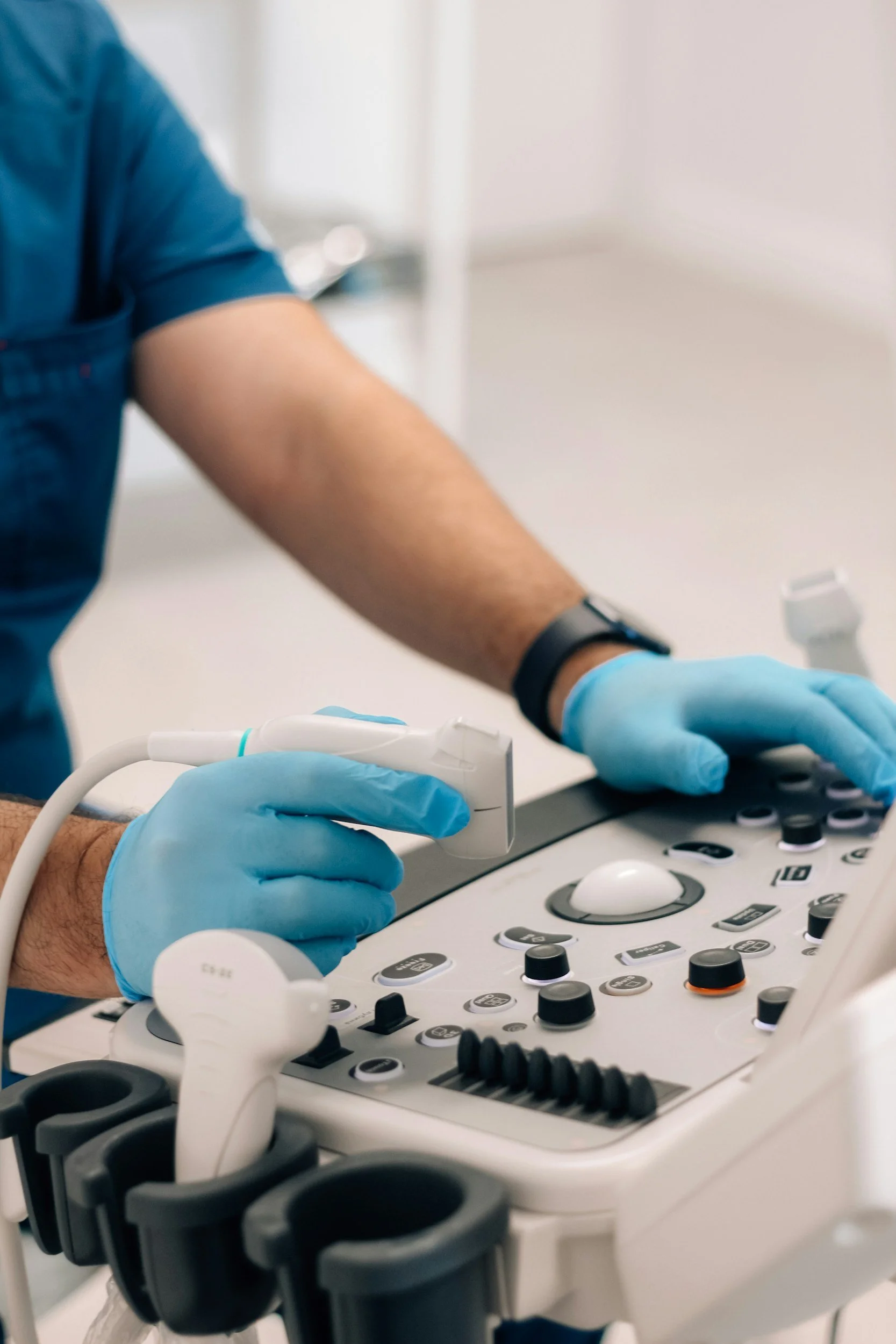
What is an Ultrasound?
An ultrasound is a non-invasive imaging technique that uses sound waves to create visual images of the internal organs and structures of the body. In fertility treatments, ultrasound plays a crucial role in diagnosing and monitoring reproductive health. It helps fertility specialists visualize the uterus, ovaries, and follicles to assess egg health, uterine conditions, and ovulation.
How Does an Ultrasound Work?
During an ultrasound, a device called a transducer is placed on the skin (for abdominal ultrasounds) or inserted into the body (for transvaginal ultrasounds). The transducer emits sound waves, which bounce off tissues and organs, creating echoes. These echoes are then captured by the device and turned into real-time images displayed on a monitor. The process is safe, painless, and often used to monitor ovulation, check for ovarian cysts, track the development of follicles, and assess the condition of the uterus and surrounding tissues.
Types of Ultrasound Used in Fertility Treatment:
1. Abdominal Ultrasound
Performed by placing a gel on the abdomen and moving a transducer over the area.
Commonly used to check the uterus and ovaries, particularly for monitoring larger structures such as follicles or cysts.
2. Transvaginal Ultrasound:
Performed by inserting a small, lubricated probe into the vagina to get closer images of the ovaries, uterus, and fallopian tubes.
Provides more detailed images, especially useful for monitoring smaller structures like follicles, early-stage pregnancies, and detecting uterine abnormalities.
Why Are Ultrasounds Important for Fertility?
Ultrasounds provide real-time imaging, allowing fertility specialists to make informed decisions regarding treatment. Some key uses include:
Follicle Monitoring: Ultrasounds are used during IVF or IUI cycles to track the development of eggs and ensure they are mature enough for retrieval or insemination.
Assessing Uterine Health: They help identify structural issues like fibroids, polyps, or abnormal growths that could interfere with implantation or pregnancy.
Ovarian Health: Detecting cysts, polycystic ovaries, or other conditions that may affect fertility.
Checking for Ectopic Pregnancies: An ultrasound can help confirm whether a pregnancy is developing in the uterus or outside (in the fallopian tube), which requires immediate medical attention.
When Should You Have an Ultrasound?
Ultrasounds may be done at different stages of your fertility journey, including:
Initial Fertility Assessments: To get a comprehensive view of your reproductive organs and identify potential issues.
During Ovulation Monitoring: To track follicle development and plan for insemination or egg retrieval.
Throughout IVF/ICSI Cycles: To monitor follicular growth and ensure the best timing for egg retrieval.
Early Pregnancy: To confirm intrauterine pregnancy and check for fetal heartbeats or any complications.
Are There Any Risks?
Ultrasounds are completely safe and do not involve radiation, making them an excellent choice for regular monitoring throughout fertility treatments.

Take the Next Step Toward Parenthood
If you’re considering fertility treatments, an ultrasound is often a crucial first step in diagnosing and understanding your unique situation. At Empower Fertility, our specialists use advanced ultrasound technology to guide your fertility journey with precision.